

Invoice Matching
Managing invoices is a critical aspect of business operations, yet it often presents challenges in ensuring accuracy and consistency. Aligning invoices with purchase orders, receipts, and delivery records requires meticulous attention to detail, as even minor discrepancies can disrupt workflows or strain vendor relationships. Invoice matching serves as a structured solution, enabling organizations to verify and reconcile invoices with related documentation. By effectively implementing this process, businesses can enhance their financial accuracy, streamline payment cycles, and mitigate risks.
What is Invoice Matching?
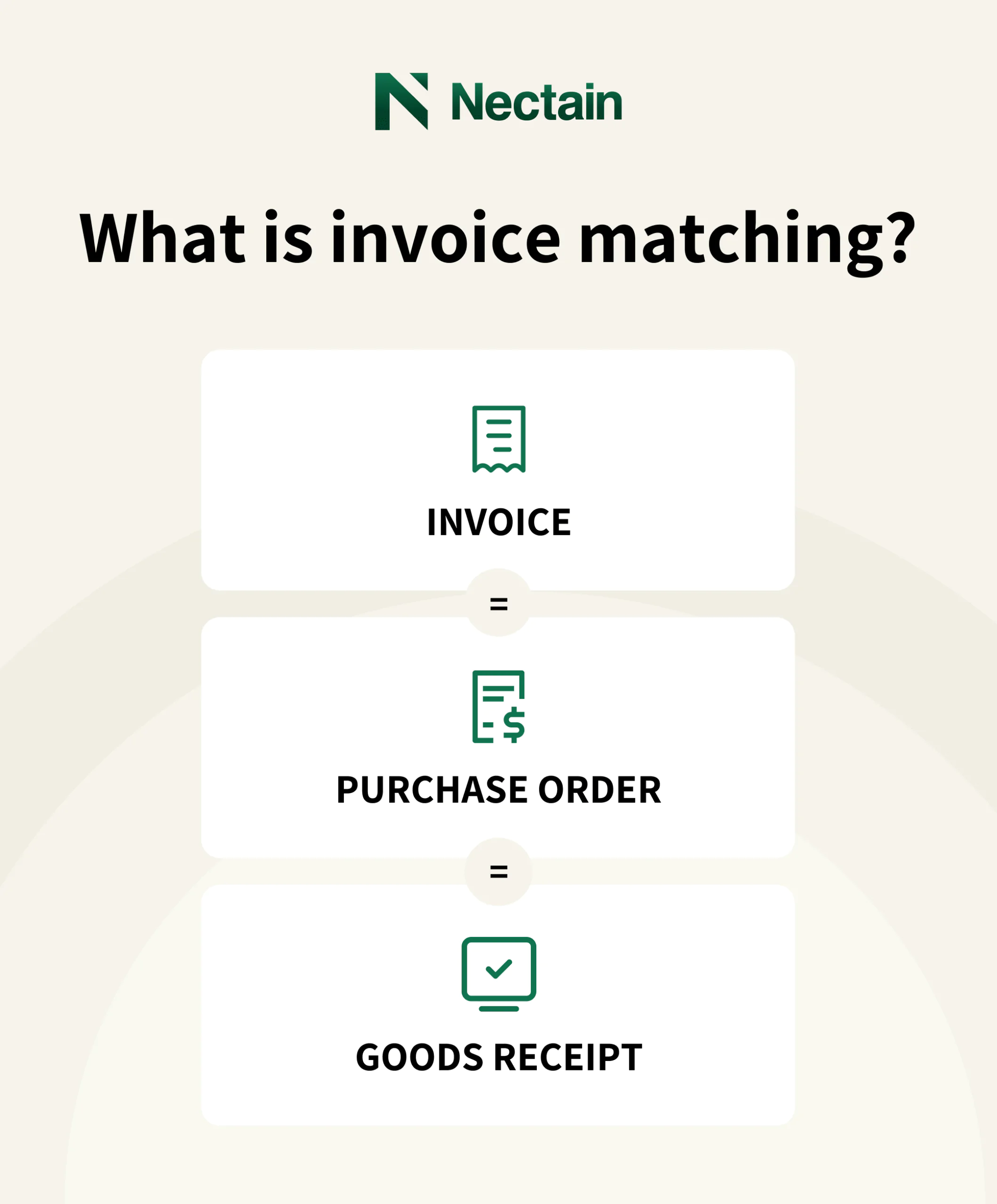
Invoice matching is the process of verifying invoices by comparing them to related documents, such as purchase orders (POs), goods received notes (GRNs), and delivery records. This process ensures that the goods or services billed match what was ordered and delivered in both quantity and price.
The goal of this is twofold: to avoid overpayments, fraud, or discrepancies and to streamline financial workflows. In essence, invoice matching acts as the financial gatekeeper, ensuring all transactions pass a rigorous verification process before approval.
How Invoice Matching Works
The process follows a structured sequence of checks to ensure accuracy at every step, from the moment an invoice is received to final payment approval. Here is a breakdown of how this process typically works:
- Invoice Receipt
When a supplier submits an invoice, it includes key details such as item descriptions, quantities, prices, and agreed payment terms. This document serves as the starting point for the matching process, initiating a thorough review.
- Retrieval of Supporting Documents
To verify the invoice, relevant records like purchase orders (POs) and goods received notes (GRNs) are gathered. With Nectain’s Smart Folders, these documents are automatically categorized and linked based on metadata, streamlining access for the verification team.
- Cross-Verification
The invoice is meticulously checked against the corresponding purchase order and GRN. Any inconsistencies—such as price mismatches, incorrect quantities, or unauthorized charges—are flagged for investigation. Nectain’s advanced IDP (Intelligent Document Processing) simplifies this process by extracting essential details and running automated validations against preset criteria.
- Addressing Discrepancies
If discrepancies are identified, the invoice is redirected to the appropriate vendor or internal department for clarification. The issue must be resolved before the invoice proceeds to the next stage.
- Approval and Payment Processing
Once all inconsistencies have been addressed and the invoice matches the relevant records, it moves to the approval stage. Payment is then processed in accordance with the organization’s policies and timelines, ensuring compliance and consistency.
By following this detailed process, businesses can reduce errors, avoid payment delays, and maintain transparent financial operations.
Types of Invoice Matching
Far from being a one-size-fits-all process, businesses may choose between three main types of invoice matching: two-way, three-way, and four-way matching. This is dependent on the level of scrutiny required.
Two-way Matching
Two-way matching is the simplest form which compares two documents: the invoice and the purchase order. The process confirms that the billed amount aligns with the agreed-upon price and quantity in the purchase order.
This method is common for straightforward transactions where the risk of discrepancies is low. While it’s efficient, two-way matching doesn’t account for delivery accuracy or condition, making it less suitable for complex procurement.
Three-way Matching
Three-way matching adds an additional layer of verification by including the goods received note (GRN) alongside the invoice and purchase order. This method ensures that:
- The goods or services billed were indeed delivered.
- The quantity and quality meet the agreed standards.
Three-way matching strikes a balance between thoroughness and efficiency, making it the most widely used method for businesses dealing with tangible goods.
Four-way Matching
For organizations requiring the highest level of accuracy, four-way matching is the gold standard. This method compares four documents: the invoice, purchase order, goods received note, and the inspection report.
Four-way matching is typically used in industries with stringent quality requirements, such as manufacturing or healthcare. By incorporating inspection data, it verifies not only the delivery but also the compliance of goods or services with agreed specifications.
Why Invoice Matching is Important
Working with invoices is more than just a bureaucratic formality—it’s a business-critical process with far-reaching benefits. Here’s why it matters:
- Prevents Overpayments
By verifying that invoices match purchase agreements, businesses can avoid paying for goods or services that were not received or were incorrectly billed.
- Minimizes Fraud
Invoice matching acts as a safeguard against fraudulent invoices by flagging discrepancies and ensuring all claims are valid.
- Improves Vendor Relationships
Accurate and timely payments foster trust and reliability between businesses and their vendors, strengthening long-term partnerships.
- Enhances Financial Accuracy
Matching invoices ensures that financial records are accurate and up-to-date, facilitating better decision-making and regulatory compliance.
- Reduces Errors
By automating parts of the matching process, businesses can significantly reduce human errors and improve overall efficiency.
Invoice Matching Automation
As organizations scale, manually handling invoicing becomes daunting and inefficient. The introduction of automation has transformed this process, delivering greater speed, precision, and efficiency while reducing the burden on finance teams.
What is Invoice Matching Automation?
When it comes to invoices, automation uses advanced technologies to simplify and enhance the verification process. By integrating automated tools, invoices are systematically cross-referenced with related documents, such as purchase orders and goods received notes, without requiring manual effort. Any inconsistencies are instantly identified and flagged for resolution. This accelerates the matching process and ensures consistent accuracy while minimizing the risk of errors, enabling businesses to maintain seamless financial workflows.
Nectain’s Role in Automating Invoice Matching

Nectain’s Document Management System offers a wide range of features designed to streamline document-centric processes, including:
- IDP (Intelligent Document Processing)
Nectain’s AI-powered IDP extracts data from invoices, purchase orders, and goods received notes, automatically comparing details to detect discrepancies.
- Workflow Automation
With Nectain, businesses can set up automated workflows that trigger actions based on document content or metadata. For instance, invoices exceeding a specific value can automatically initiate multi-level approvals.
- Rich Metadata Management
Nectain enables the capture and management of complex metadata, such as structured data and tables, allowing for more detailed and accurate comparisons.
- Smart Folders and Saved Searches
Nectain’s smart folders dynamically group related documents, while saved searches provide quick access to frequently used datasets, simplifying document retrieval.
- Collaboration Tools
Built-in live chat and seamless integration with Microsoft 365 enable teams to resolve mismatches quickly, ensuring smooth communication with internal and external stakeholders.
- Dashboards and Reporting
Customizable dashboards with interactive widgets offer real-time visibility into workflows, helping businesses identify bottlenecks and monitor progress.
Benefits of Automation
- Increased Efficiency
Automation significantly reduces the time spent on manual invoice matching, allowing finance teams to focus on strategic tasks.
- Improved Accuracy
By eliminating human errors, automation ensures greater accuracy in financial transactions.
- Cost Savings
Automation reduces administrative costs by streamlining processes and minimizing errors that could lead to financial losses.
- Scalability
Automated systems can handle high volumes of invoices, making them ideal for growing businesses.
- Real-Time Insights
Automation tools often come with dashboards and analytics, providing businesses with real-time insights into their financial processes.
Invoice matching is a critical process for businesses striving to maintain financial accuracy, streamline operations, and foster trust with vendors. It ensures that every transaction is verified and accounted for, reducing errors and protecting against fraud. With Nectain’s advanced automation features, businesses can elevate their invoice matching practices to a new level, ensuring compliance, accuracy, and operational excellence. By integrating intelligent tools and workflows, organizations not only save time and resources but also build a strong foundation for scalable growth and financial transparency.